Taleggio Foundry

Home › Typefaces › Leggio

Leggio

A medieval display font for fantasy covers, game titles and labels.

1 style30 languagesOTF, TTF, WOFF2

Leggio is a medieval display font. Its name is Italian for the lectern that held the great choir books, and its letters are inspired by the Rotunda book hands of 14th- and 15th-century Italy. Sharp pen strokes and open, generous shapes give titles a striking medieval rhythm while smaller text stays easy to read. Set it on fantasy book covers, game titles, labels and posters.

Leggio in use

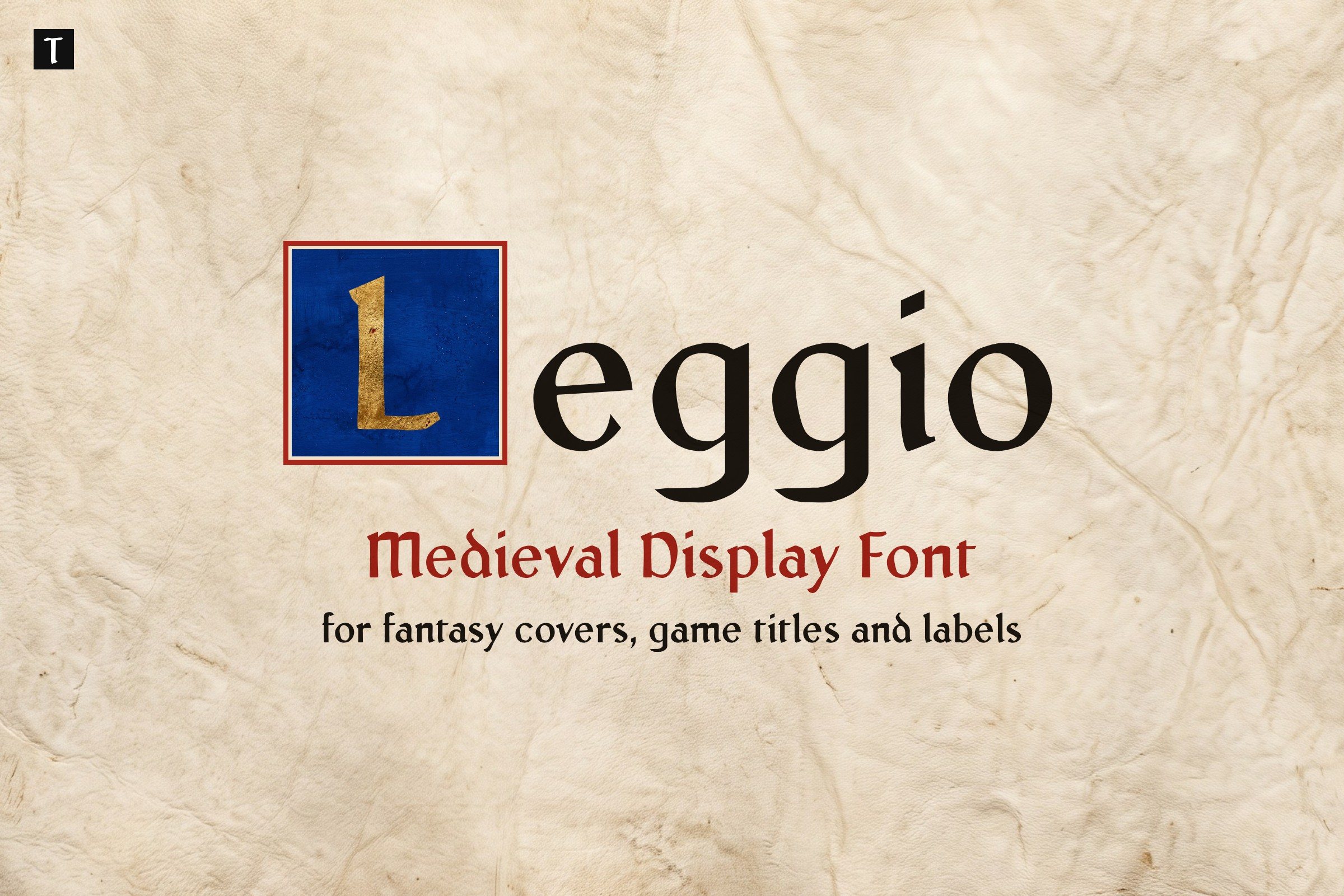
The name Leggio in ink on vellum with a gold initial L on blue: Medieval Display Font
Leggio, a medieval display font, set in gold on vellum
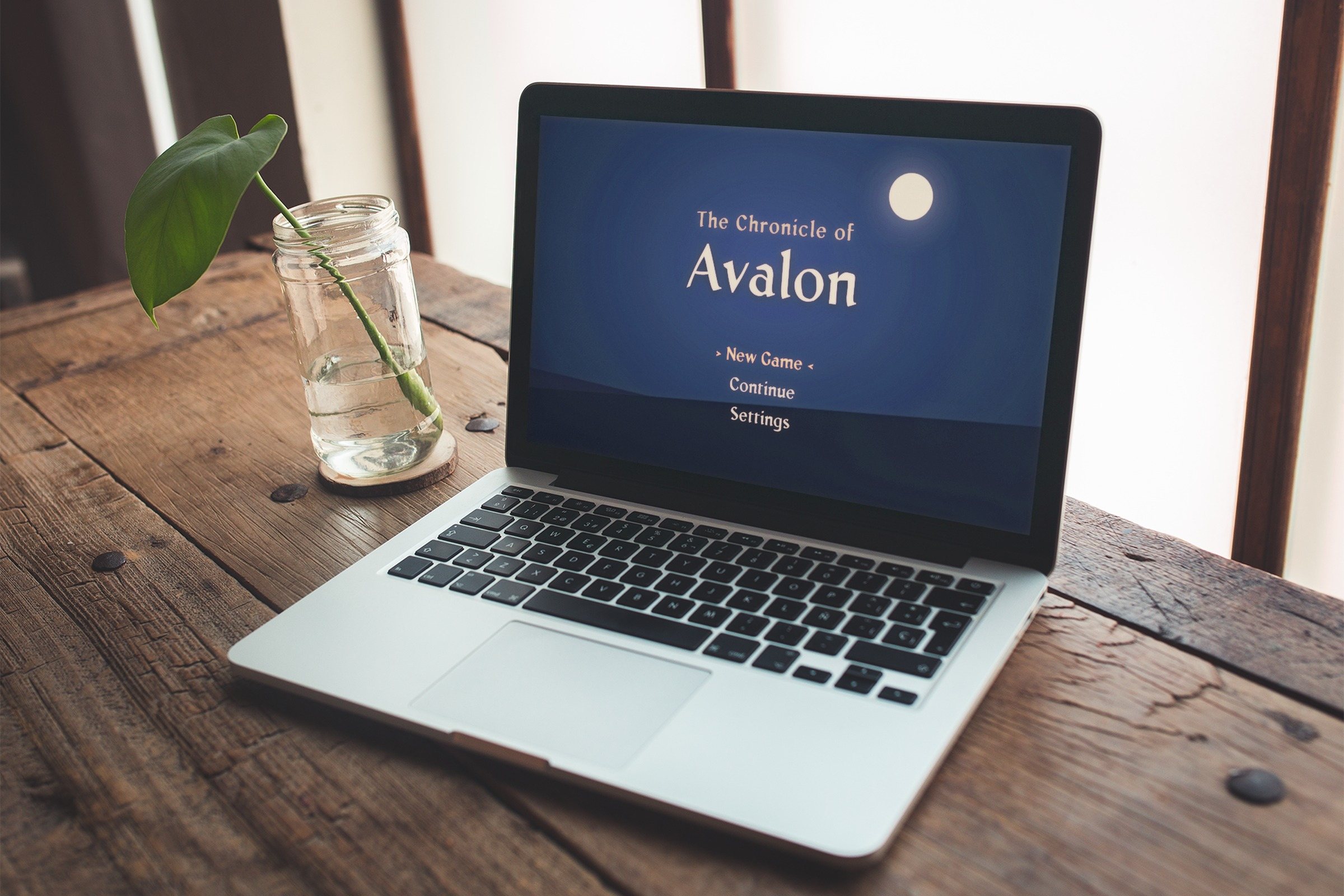
Leggio font on a laptop game title screen: The Chronicle of Avalon, New Game, Continue, Settings
The Chronicle of Avalon: New Game, and the night is long
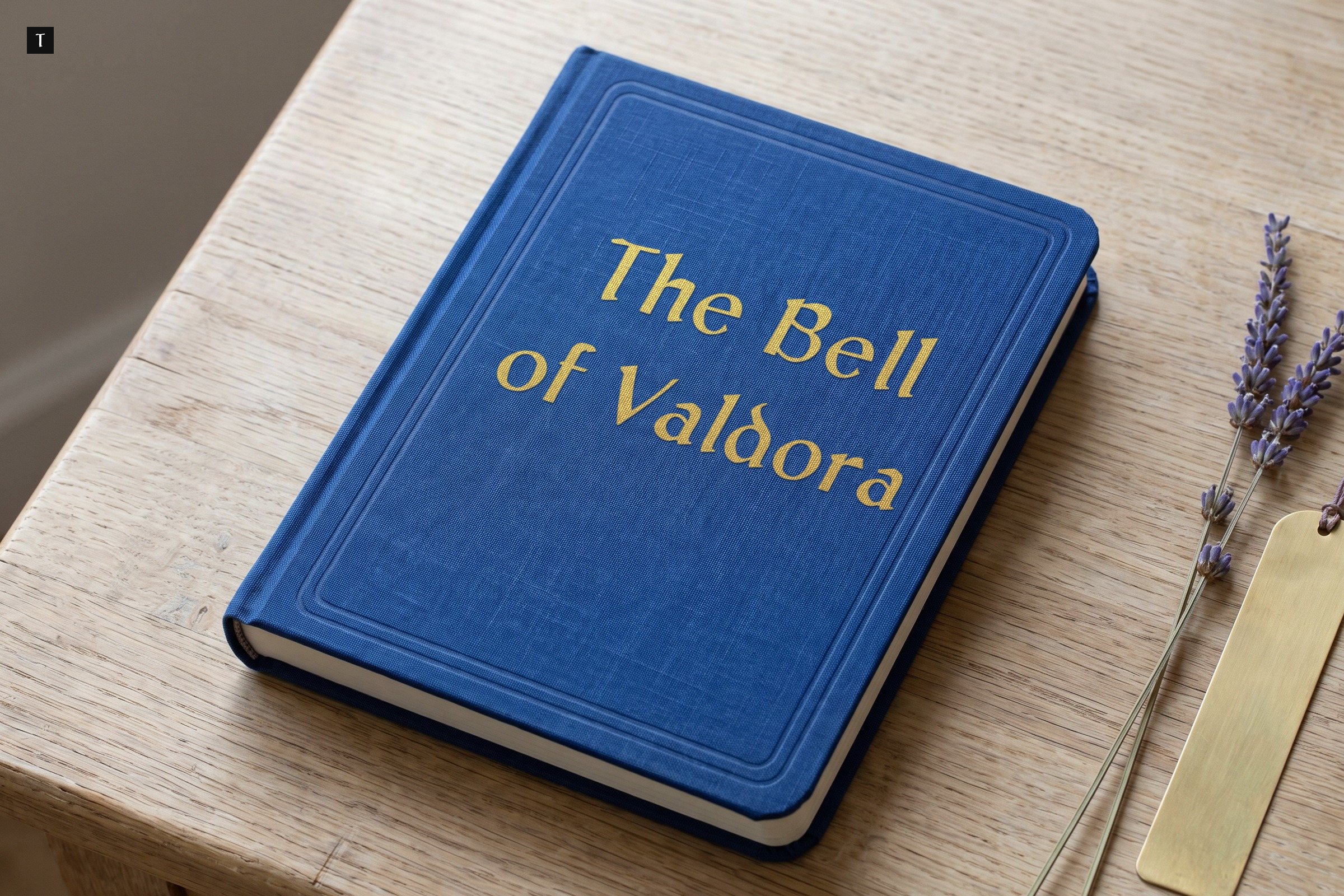
Leggio medieval font in gold foil on a blue cloth fantasy book cover: The Bell of Valdora
The Bell of Valdora: a title that rings before page one
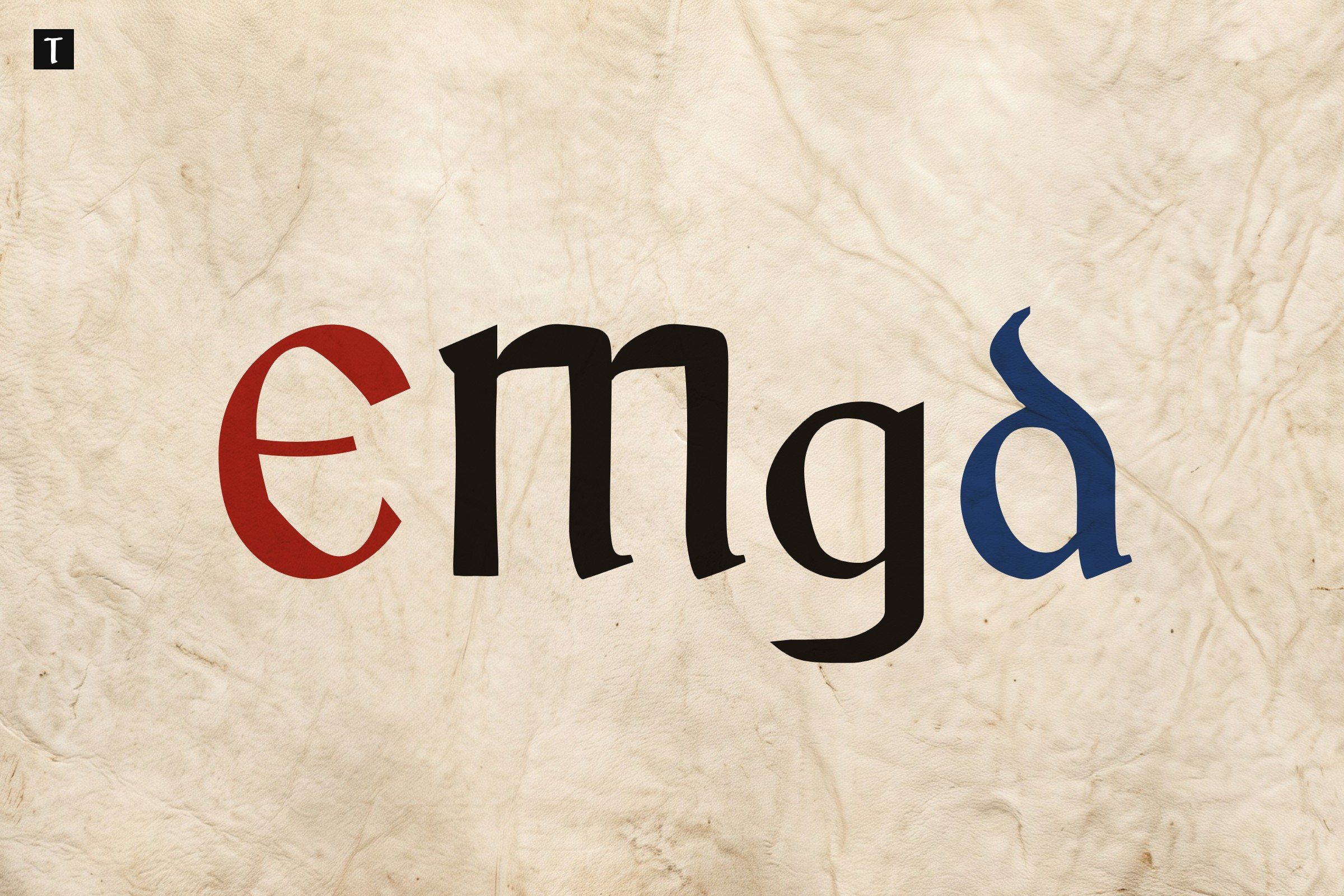
Leggio letters E, M, g and d set large in red, black and blue on vellum
Round forms of the old book hand: E, M, g and d
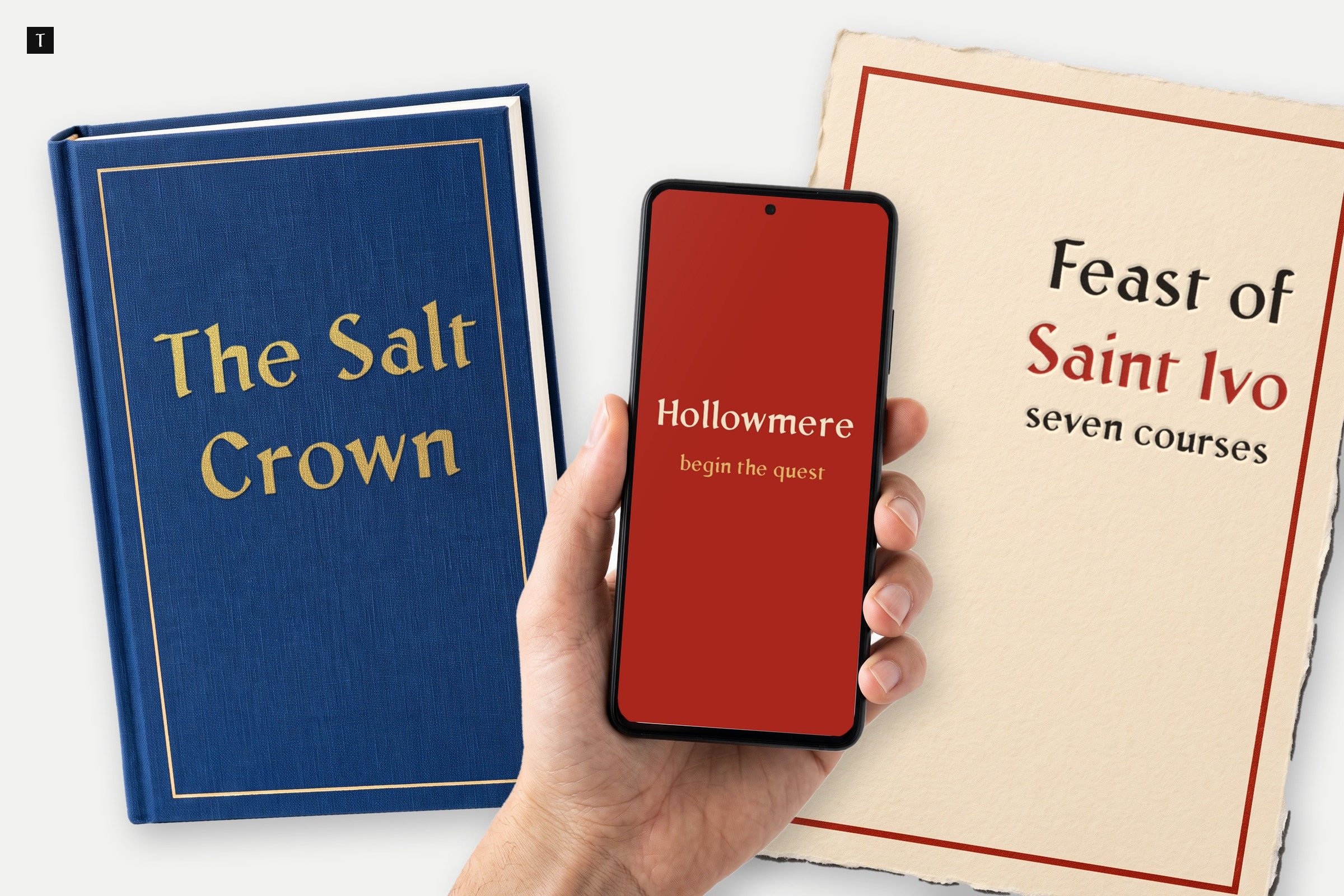
Leggio font on a book cover, a phone game screen and a feast menu: The Salt Crown, Hollowmere, Feast of Saint Ivo
Novel, quest, feast: one book hand for three stories
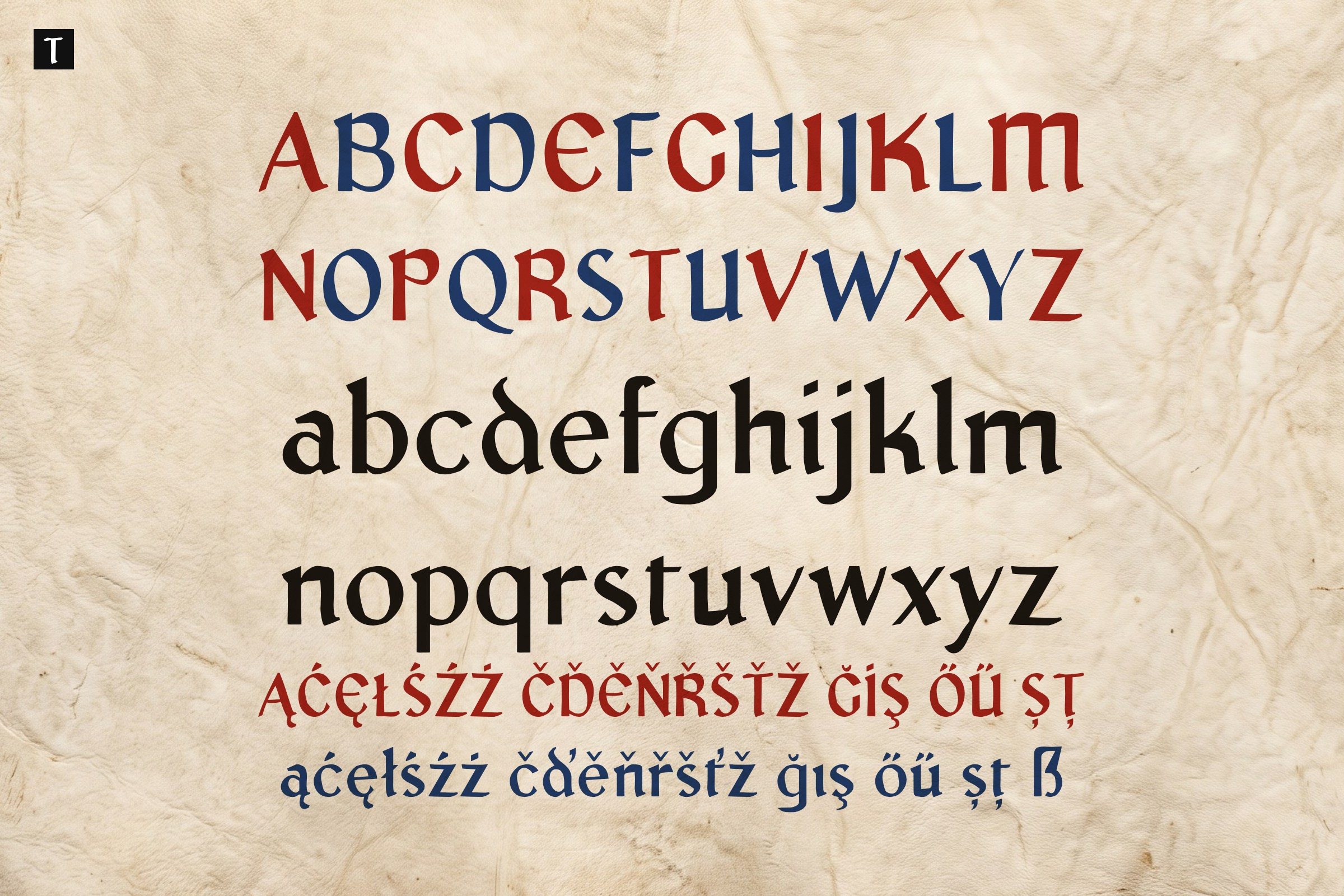
The Leggio alphabet, capitals and lowercase, with Polish, Czech, Turkish, Hungarian and Romanian accented letters
52 letters, 130 accented and special letters, 305 glyphs in all
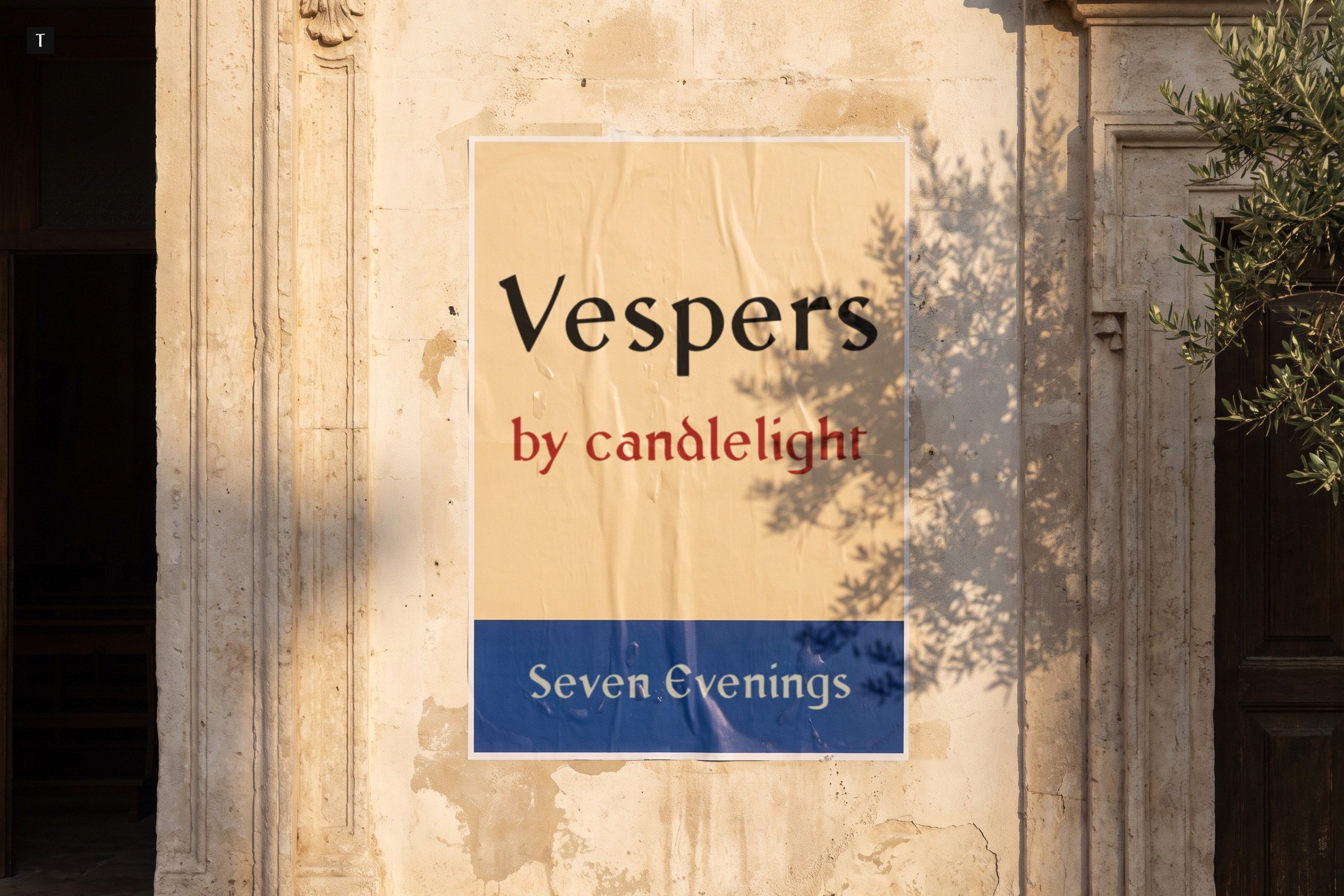
Leggio font on a concert poster on a sunlit stone wall: Vespers by candlelight, Seven Evenings
Vespers by candlelight: seven evenings, one stone wall
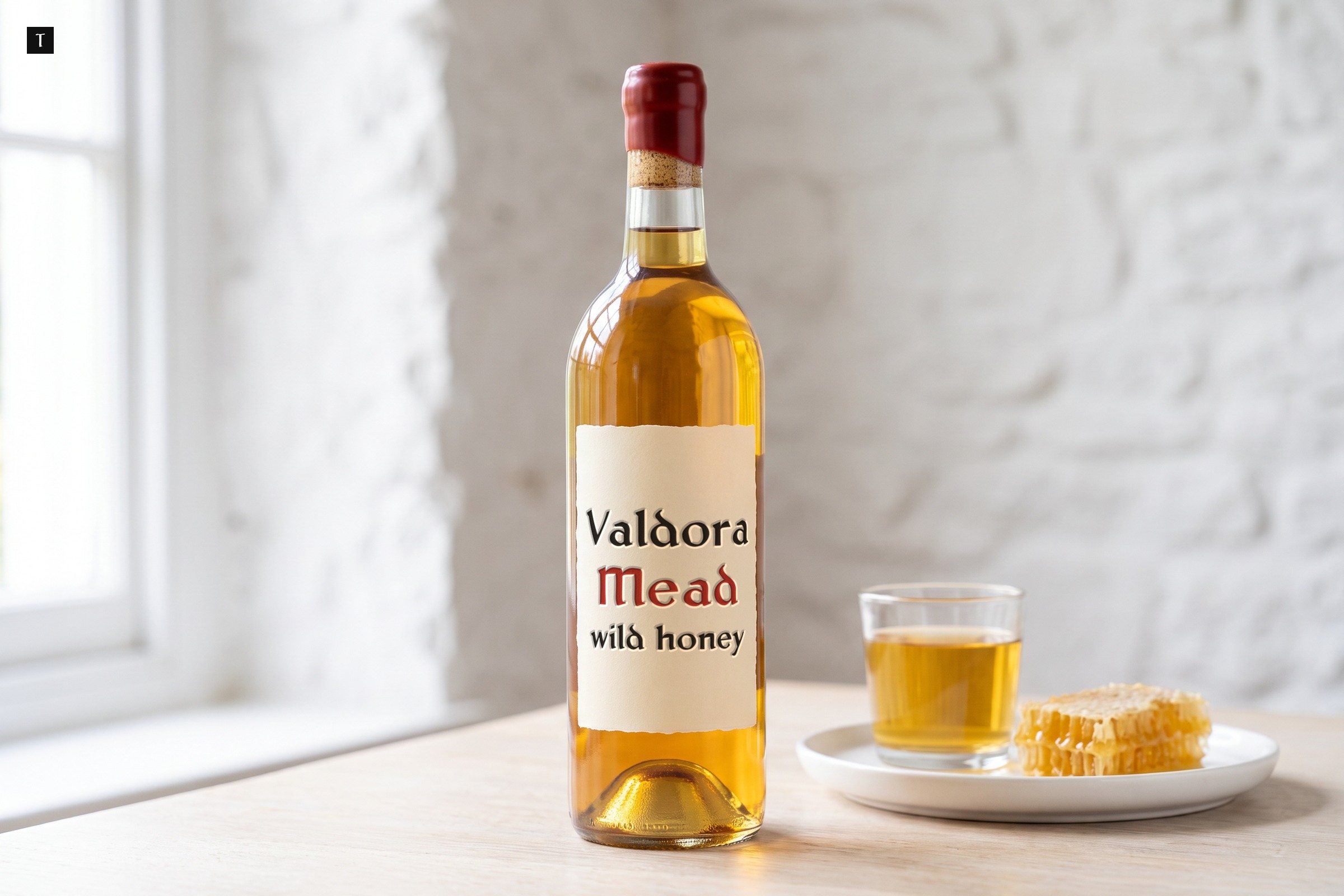
Leggio font on the label of a mead bottle: Valdora Mead, wild honey
Valdora Mead, wild honey, poured on a winter afternoon
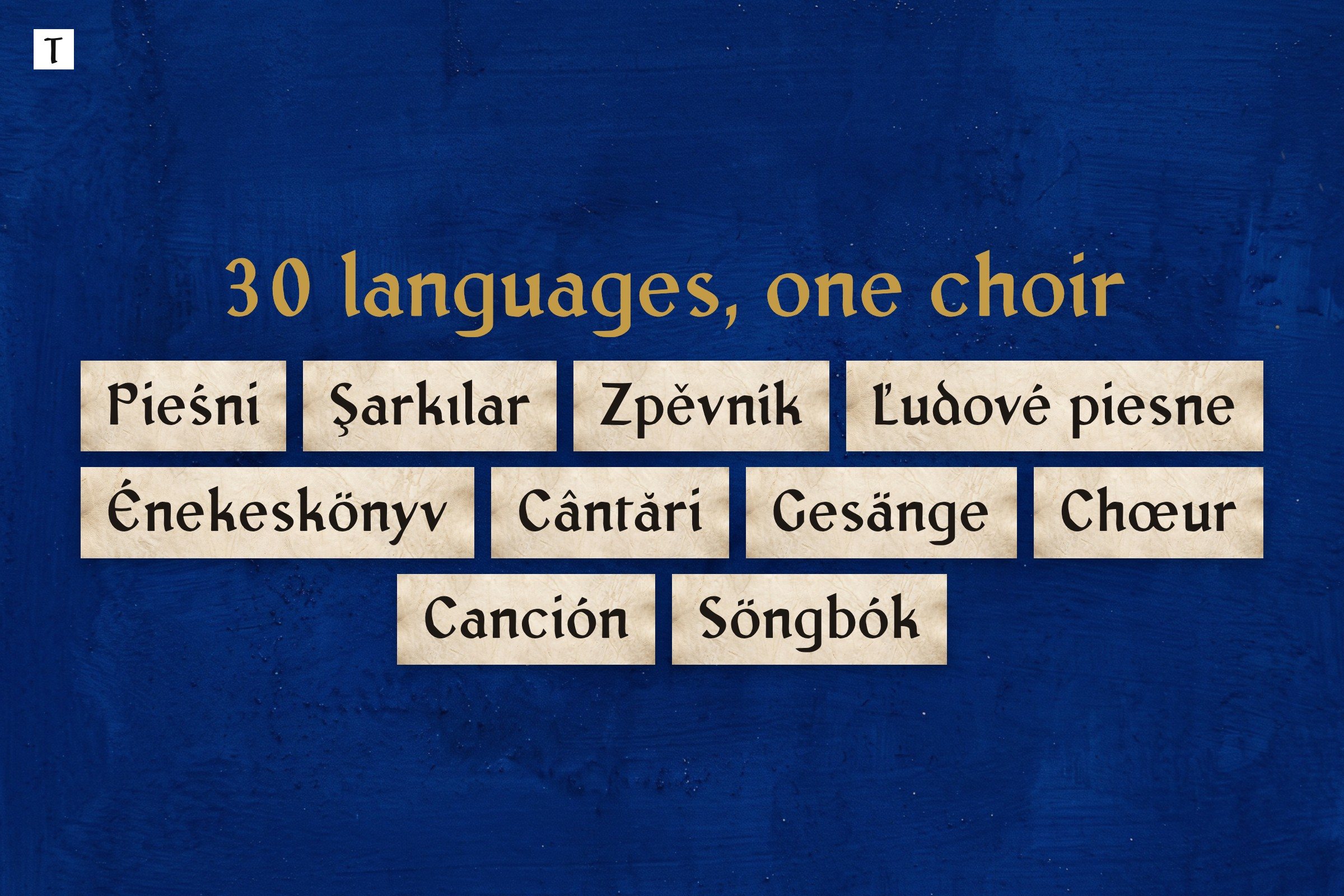
The word for songs in ten languages set in Leggio on vellum slips: Pieśni, Şarkılar, Zpěvník, Énekeskönyv
30 languages: Polish, Czech, Hungarian, Turkish, Romanian, Icelandic and more
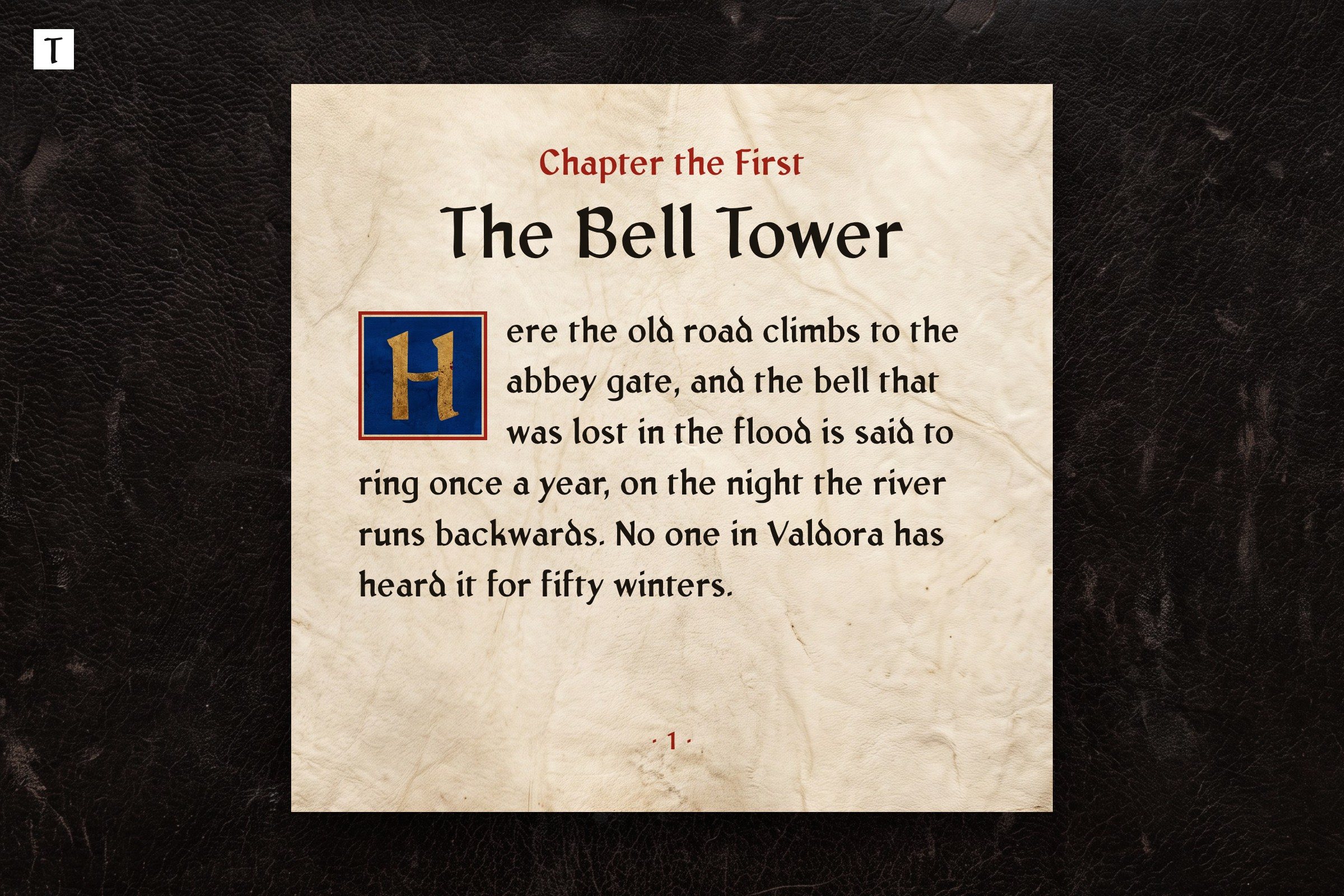
Leggio font on a book chapter opening: Chapter the First, The Bell Tower, with a gold initial H
Chapter the First: the bell nobody has heard in fifty winters
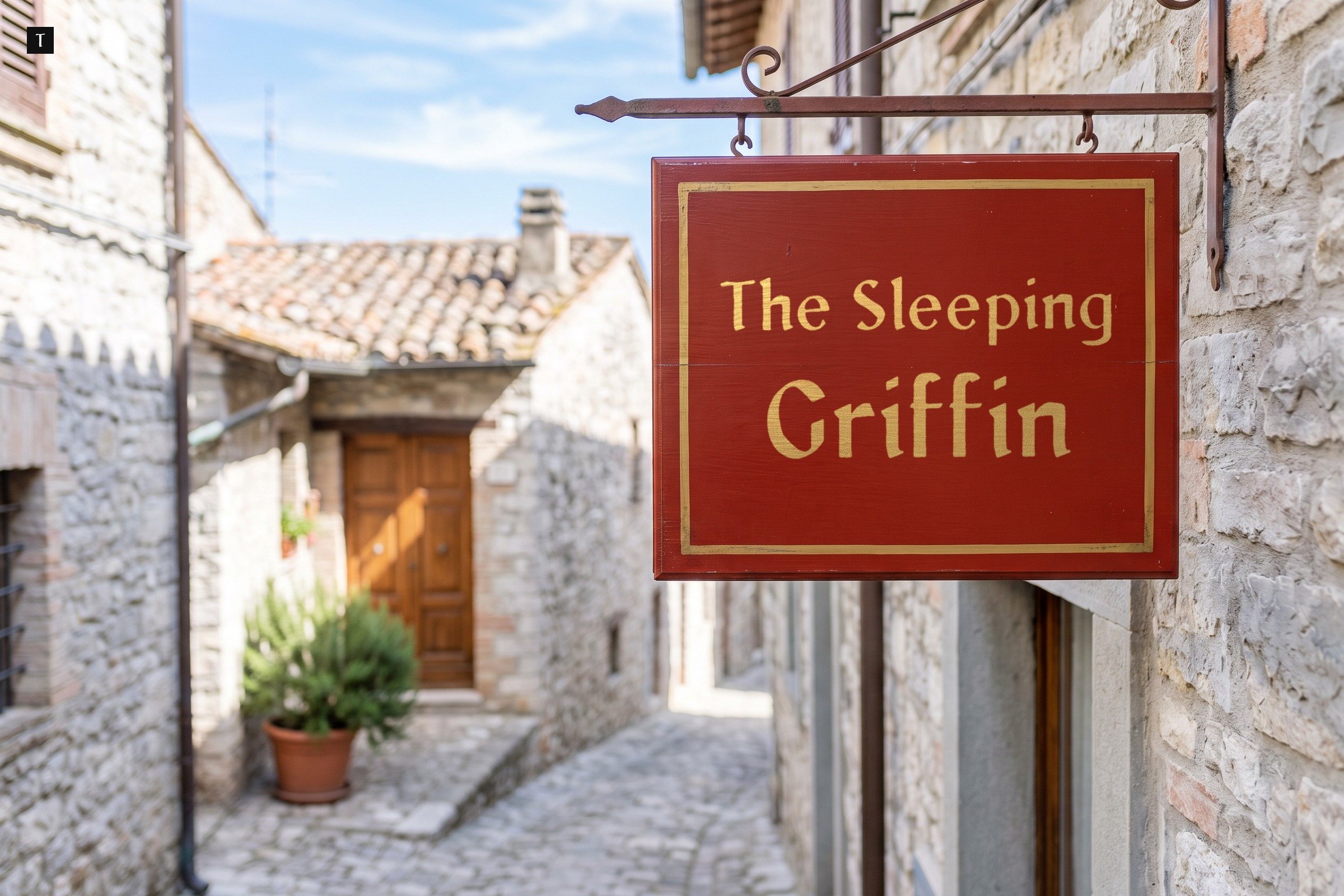
Leggio font painted in gold on a red hanging inn sign: The Sleeping Griffin
A bed, a fire, mead downstairs: The Sleeping Griffin
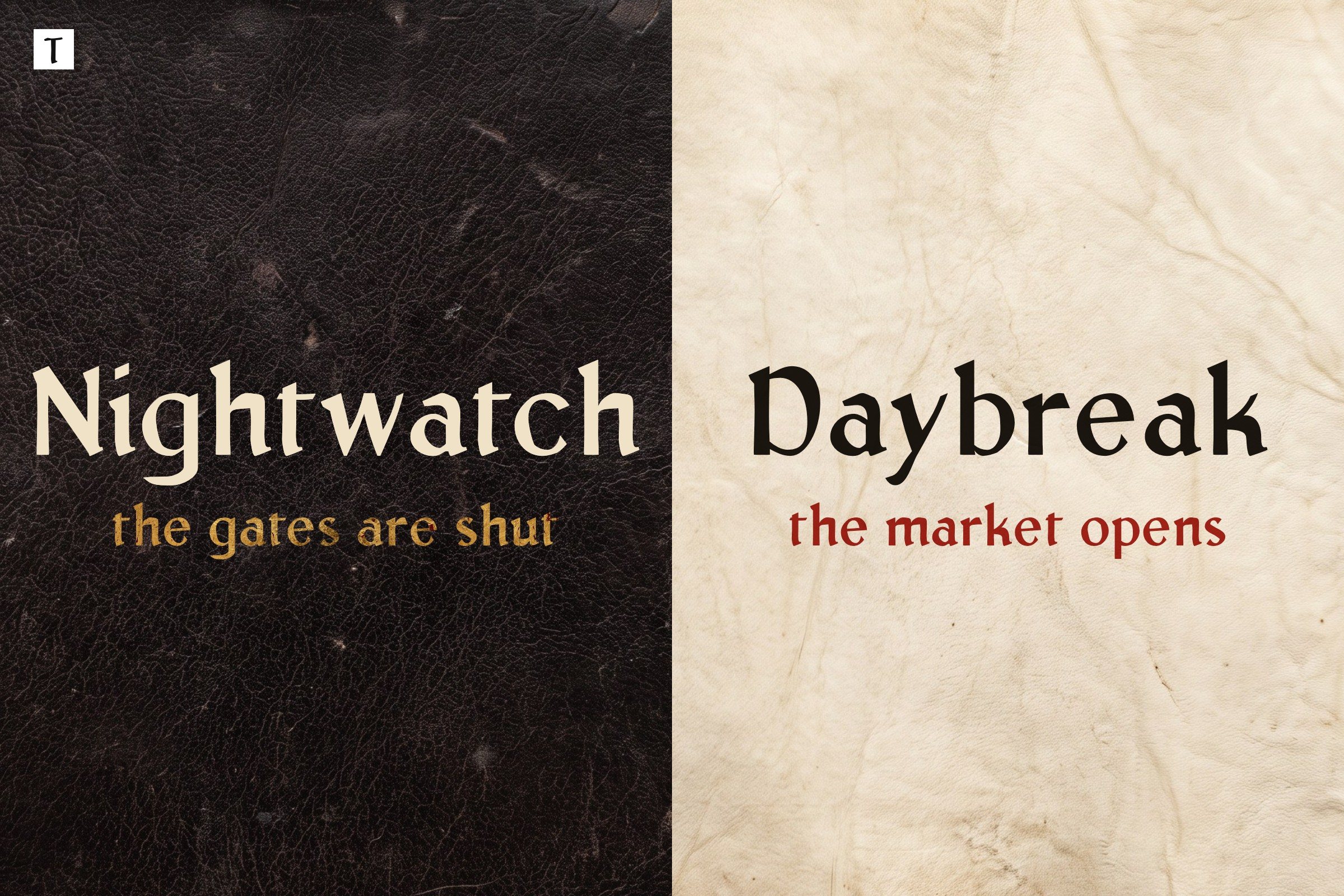
Leggio font light on dark and dark on light: Nightwatch, the gates are shut and Daybreak, the market opens
Nightwatch on dark leather, Daybreak on vellum: clear either way
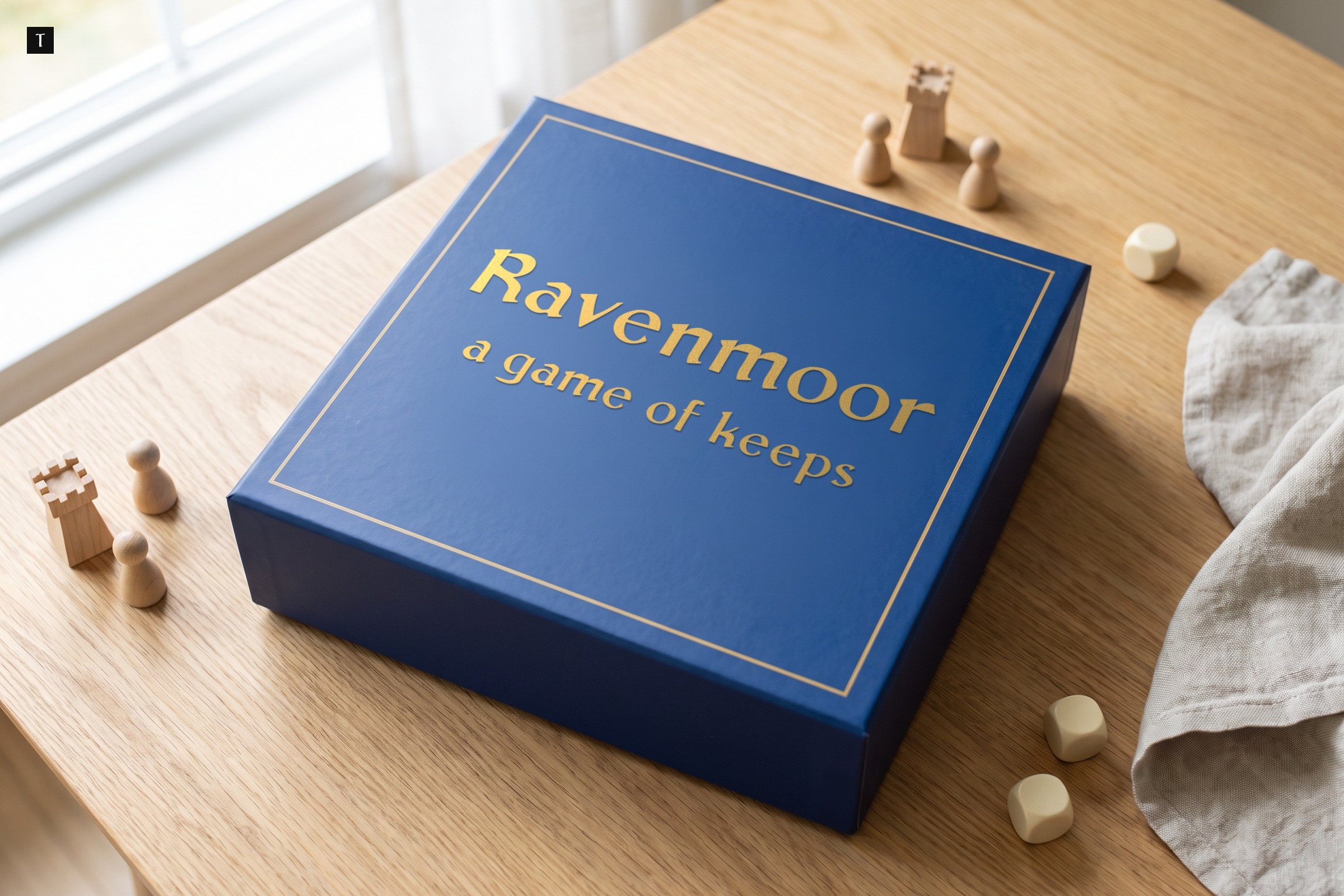
Leggio font in gold on a blue board game box: Ravenmoor, a game of keeps
Ravenmoor, a game of keeps, ready for a long evening
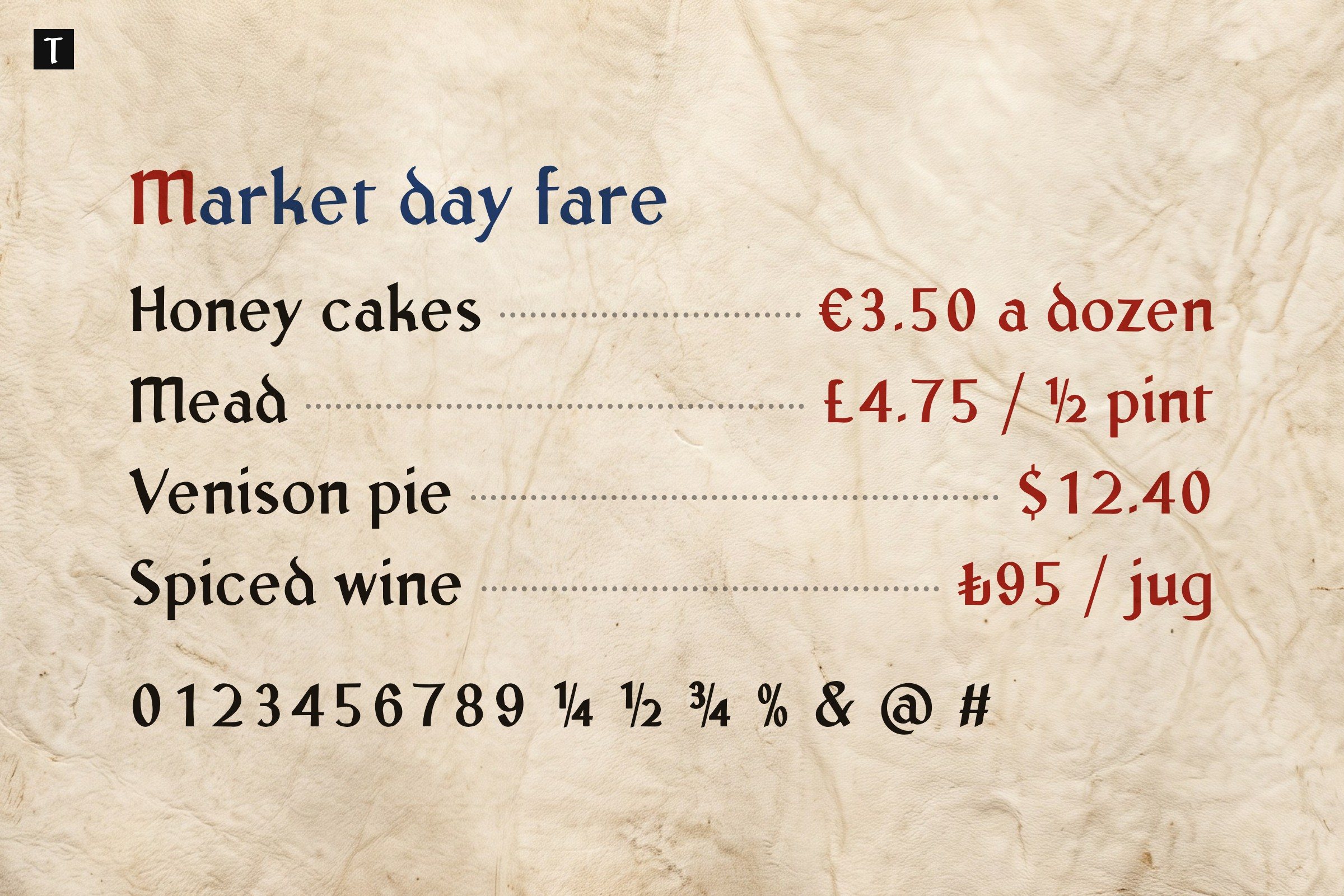
Leggio figures: a market price list in euros, pounds, dollars and lira, digits, fractions and signs
Market day fare: figures, seven currency signs, fractions, 45 punctuation marks

Notes on the design

Leggio follows the round Gothic book hand of Italy, the one used for the great choir books that stood open on a lectern. We kept its round, open bowls and short ascenders and gave every stroke a crisp cut, so the letters read as medieval and still read. Left out on purpose: the spiky blackletter of German print, and any worn or inky texture in the letters themselves. That belongs in the picture, not in the font.

01

Why is this M shaped like an m?

Leggio mixes two kinds of capitals. Most are plain, with straight stems, but E, M and U take the round forms of the old book hand. A few round forms give the Gothic voice, while the plain majority keeps a title easy to read.

02

Which letters came first?

Leggio began with n, o and d in the first sketch, and the rest was built from their parts: most of h and all of r lie on n, c is an opened o, a borrows the bowl of d. That is why every letter speaks with the same hand.

03

Why does this Gothic read so easily?

Leggio follows the round book hand, not the narrow one: the white inside an n is wider than its stem. Squeeze the same letters a little and the counters fill in at small sizes, and the words blur.

04

Why do all these tops slope the same way?

Every stroke end is cut at one of a few shared angles: the heads of the stems, the dot of the i and the tops of a, c, f and t all rise the same way. Repeated cuts are what make different letters look written by one pen.

Character set

Leggio in 30 languages

Leggio has the accented letters for 30 languages written in the Latin alphabet, so the same book hand sets a title in English, French, German, Polish, Turkish or Icelandic. Choose a language to see a line set in Leggio.

French Français

Le chœur chante à la lumière des cierges

French letters: à â æ ç è é ê ë î ï ô ù û ü ÿ œ

German Deutsch

Fröhliche Lieder für kühle Nächte

German letters: ä ö ü ß

Spanish Español

Canciones para la noche más larga

Spanish letters: á é í ñ ó ú ü ¡ ¿

Italian Italiano

Il coro canta più piano la sera

Italian letters: à á è é ì í ò ó ù ú

Portuguese Português

Canções antigas para a noite de São João

Portuguese letters: à á â ã ç è é ê í ò ó ô õ ú

Dutch Nederlands

Oude liederen voor de lange winteravond

Dutch letters: á â ä è é ê ë í ï ó ô ö ú û ü ij

Catalan Català

Cançons antigues per a la nit de Nadal

Catalan letters: à ç è é í ï ò ó ú ü ŀ

Swedish Svenska

Gamla sånger för långa vinterkvällar

Swedish letters: å ä ö é

Danish Dansk

Gamle sange til lyse sommernætter

Danish letters: å æ ø é

Norwegian Norsk

Sanger for kor på søndag morgen

Norwegian letters: å æ ø é è ê ó ò ô

Finnish Suomi

Vanhoja lauluja pitkiin talviöihin

Finnish letters: ä ö å š ž

Icelandic Íslenska

Gömul lög fyrir langar vetrarnætur

Icelandic letters: á æ é í ð ó ö ú ý þ

Estonian Eesti

Vanad laulud pikkadeks talveõhtuteks

Estonian letters: ä õ ö ü š ž

Polish Polski

Stare pieśni na długie zimowe wieczory

Polish letters: ą ć ę ł ń ó ś ź ż

Czech Čeština

Staré písně pro dlouhé zimní večery

Czech letters: á č ď é ě í ň ó ř š ť ú ů ý ž

Slovak Slovenčina

Staré piesne na dlhé zimné večery

Slovak letters: á ä č ď é í ĺ ľ ň ó ô ŕ š ť ú ý ž

Hungarian Magyar

Régi dalok a hosszú téli estékre

Hungarian letters: á é í ó ö ő ú ü ű

Romanian Română

Cântece vechi pentru nopțile lungi de iarnă

Romanian letters: ă â î ș ț

Turkish Türkçe

Uzun kış geceleri için eski şarkılar

Turkish letters: ç ğ ı İ ö ş ü

Irish Gaeilge

Amhráin aosta don oíche fhada

Irish letters: á é í ó ú

Scottish Gaelic Gàidhlig

Òrain aosta airson na h-oidhche

Scottish Gaelic letters: à è é ì ò ó ù

Basque Euskara

Gabonetako abesti zaharrak

Basque letters: ñ ü

Galician Galego

Cancións antigas para a noite de San Xoán

Galician letters: á é í ñ ó ú ü

Albanian Shqip

Këngë të vjetra për netët e gjata

Albanian letters: ç ë

Afrikaans Afrikaans

Ou liedjies vir lang winteraande

Afrikaans letters: á é è ê ë î ï ö ô û ü ý

Indonesian Bahasa Indonesia

Lagu lama untuk malam yang panjang

Malay Bahasa Melayu

Lagu-lagu lama pada waktu malam

Filipino Filipino

Mga lumang awit para sa mahabang gabi

Filipino letters: ñ

Swahili Kiswahili

Nyimbo za zamani za usiku mrefu
Facts

Styles
Regular
Glyphs
305
Languages
30, Latin script
Formats
OTF, TTF, WOFF2
Features
Kerning, fi and fl ligatures
Licences
Desktop, Web, App, ePub
Version
1.201, October 2026

Get Leggio

MyFonts

Desktop, Web, App and ePub licences.

Get it on MyFonts

Fontspring

Desktop, Web, App and ePub licences.

Open on Fontspring

Gumroad

Desktop, Web, App and ePub licences.

Open on Gumroad

Etsy

Desktop licence for one person.

Open on Etsy

itch.io

Desktop and App licences, for game makers.

Open on itch.io

Questions or custom licences: contact [at] taleggiofoundry.com

Questions

Can I use Leggio for commercial work?

Yes. The Desktop licence covers personal and client work: book covers, posters, packaging, merch and print-on-demand products.

Can I make a logo with it?

Yes. A logo set in Leggio is yours to use; the font files themselves stay licensed to you.

Does it work in Cricut, Silhouette and Procreate?

Yes. Install the OTF on your computer or iPad, and any app that uses installed fonts can set it.

Can I use it on a website, in a game or an e-book?

Yes, with the Web, App or ePub licence, sold on MyFonts and Gumroad. Our licence page explains the Gumroad licences in plain words; MyFonts uses its own.

Which languages does it cover?

Thirty languages written in the Latin alphabet, from French and German to Polish, Turkish and Icelandic. Each one is shown above.

Is there an Italic?

Not yet. Follow the foundry on Gumroad to hear when new styles arrive.